
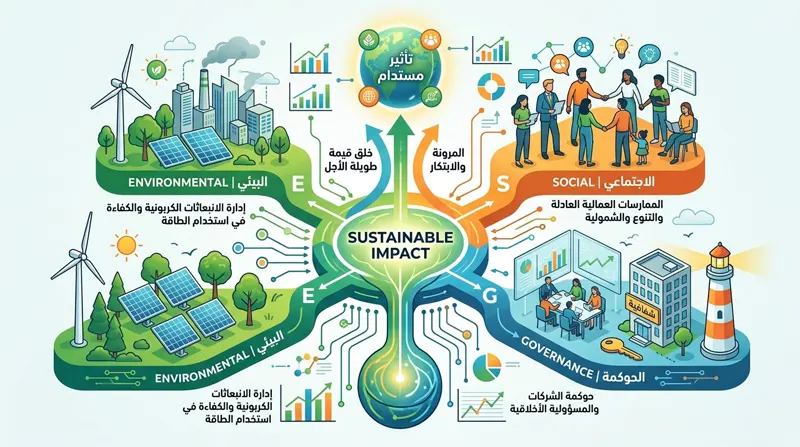
Understanding ESG: A Framework for Sustainable Impact

In a world increasingly shaped by environmental crises, social inequalities, and governance failures, the ESG framework—Environmental, Social, and Governance—has emerged as a powerful lens through which organizations, investors, and policymakers evaluate long-term value and ethical responsibility. Far from being a corporate buzzword, ESG is now a cornerstone of sustainable development and strategic decision-making across sectors.
What Is ESG?
At its core, ESG is a set of criteria used to assess how an organization performs in areas beyond traditional financial metrics:
- Environmental: How does the organization impact the planet? This includes carbon emissions, energy efficiency, waste management, water usage, and biodiversity protection.
- Social: How does it treat people? This covers labor practices, diversity and inclusion, community engagement, human rights, and customer satisfaction.
- Governance: How is it run? This includes board diversity, executive compensation, transparency, anti-corruption measures, and shareholder rights.
Together, these pillars offer a holistic view of an organization’s ethical footprint and resilience.
Why ESG Matters
1. Risk Management: ESG helps identify non-financial risks that could affect long-term performance—such as climate-related disruptions, labor disputes, or governance scandals.
2. Investor Confidence: ESG-aligned companies often attract more stable, long-term investment. Studies show that firms with strong ESG performance tend to outperform peers in both reputation and returns.
3. Regulatory Compliance: Governments and stock exchanges worldwide are mandating ESG disclosures. Staying ahead of these requirements is not just smart—it’s essential.
4. Brand and Talent Magnetism: Consumers and employees increasingly favor organizations that align with their values. ESG leadership can enhance brand loyalty and attract top talent.
Where ESG Is Applied
Finance and Investment: ESG is now a key criterion in portfolio management. Asset managers use ESG ratings to screen investments, reduce exposure to high-risk sectors, and align with sustainable development goals.
Corporate Strategy: Companies integrate ESG into supply chains, product design, and stakeholder engagement. For example, tech firms are reducing energy consumption in data centers, while fashion brands are rethinking sourcing and labor practices.
Public Policy and Development: Governments and development agencies use ESG to guide infrastructure projects, public procurement, and international aid—ensuring that growth is inclusive and environmentally sound.
Higher Education and Research: Universities are embedding ESG into curricula, research agendas, and campus operations, preparing future leaders to think systemically and act responsibly.
ESG in Practice: From Theory to Transformation
Implementing ESG is not a one-size-fits-all endeavor. It requires:
- Materiality Assessments to identify what ESG issues matter most to stakeholders.
- Data and Metrics to track progress and benchmark performance.
- Stakeholder Engagement to ensure transparency and accountability.
- Continuous Learning to adapt to evolving standards and expectations.
Organizations like the Hermon Team can play a pivotal role in this transformation—helping institutions assess ESG readiness, design tailored strategies, and embed sustainability into their core operations.
Here are some compelling real-world examples that show ESG in action across industries and geographies:
1. Microsoft – Environmental Leadership
Microsoft has committed to becoming carbon negative by 2030, meaning it will remove more carbon from the atmosphere than it emits. It’s also investing in renewable energy and sustainable data centers, and has launched a $1 billion Climate Innovation Fund to accelerate global climate solutions.
2. Unilever – Social Impact and Supply Chain Ethics
Unilever’s “Growth Action Plan” integrates ESG into every facet of its operations. It focuses on sustainable sourcing, reducing plastic use, and improving health and hygiene through its product lines. The company also emphasizes diversity, equity, and inclusion in its workforce and leadership.
3. LVMH – Governance and Circular Economy
The luxury conglomerate LVMH has implemented its LIFE 360 program, which includes targets for carbon reduction, biodiversity protection, and circular product design. Over 60% of its new products are now sustainably designed, and it uses 63% renewable energy across operations.
4. Cisco – Community Investment and Emissions Reduction
Cisco aims to reach net-zero emissions by 2040 and has already pledged over $477 million to community programs. Its ESG strategy includes digital inclusion, ethical governance, and transparent reporting practices.
5. NVIDIA – Energy Efficiency in Tech
NVIDIA’s H100 GPUs are designed to be 26 times more energy efficient than traditional CPUs. The company offsets 100% of its global electricity use with renewable energy and powers the world’s most efficient supercomputer, according to the Green500 ranking.
These examples show how ESG is not just about compliance—it’s about innovation, resilience, and long-term value creation. If you’d like, I can help map out how similar ESG strategies could be adapted for Syrian institutions or integrated into Hermon Team’s consulting offerings.
Looking Ahead
As global challenges intensify, ESG is no longer optional—it’s a strategic imperative. Whether you’re an investor seeking resilient assets, a policymaker shaping inclusive economies, or a business leader navigating complex markets, ESG offers a roadmap to create value that lasts.